
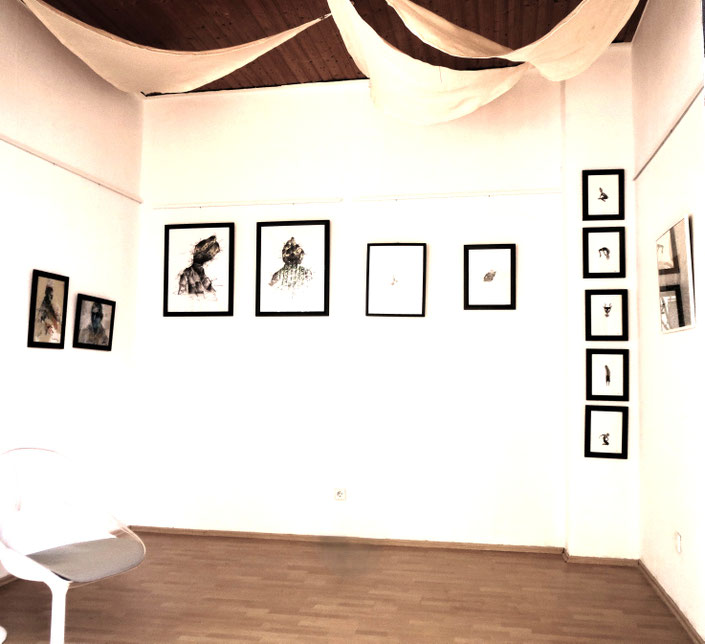
Inspired of the racy and manifold upcoming of contemporary Arabian art, the gallery
Plan A - خطة ا
was founded to connect artists, collectors and cultural institutions.
Contemporary Arab art is currently among the most compelling developments in the actual international art scene. Shaped by cultural heritage, social transformation, and global influences, artists are creating positions of remarkable originality and relevance. Although still relatively underrepresented within the European art market, this circumstance contributes to its exceptional curatorial and collector potential.
Plan A Gallery places a special focus on contemporary Moroccan art. The gallery presents works by emerging artists whose practices reflect current political, social, and cultural dynamics while developing a strong and distinctive visual language. Themes such as identity, memory, urbanity, and societal transformation characterize many of the represented artistic positions.
The artists operate within a fascinating field of tension between traditional Moroccan aesthetics and the impulses of modern Western art. From this dialogue emerge unmistakable artistic signatures that view cultural heritage not as a limitation, but as a point of departure for new visual expressions. The works combine local references with an international perspective, creating an independent presence within the global contemporary art landscape.
These artistic positions are still relatively little represented on the international art market. At the same time, interest from collectors, institutions, and curators continues to grow steadily. Early engagement with these artistic developments offers the opportunity to discover an art scene whose cultural and art historical significance is becoming increasingly evident.
Plan A Gallery sees itself as a platform for this development - with a curated program dedicated to making contemporary Arab art, and particularly contemporary Moroccan art, visible through its relevance, artistic quality, and distinctive visual language.

Karim Barka
خطة ا Plan A for Arabian Art
Opening hours
Every 1. and 3. Saturday
Every 2. and 4. Friday
10 - 17 o´clock
and on appointement
Schmidtstr. 38
44793 Bochum
Dr. Kristin Schulte
Phone: +49 (0) 17684450913
Mail: [email protected]
https://www.facebook.com/100095158443785
Instagramm
https://www.instagram.com/plan_a_gallery/